


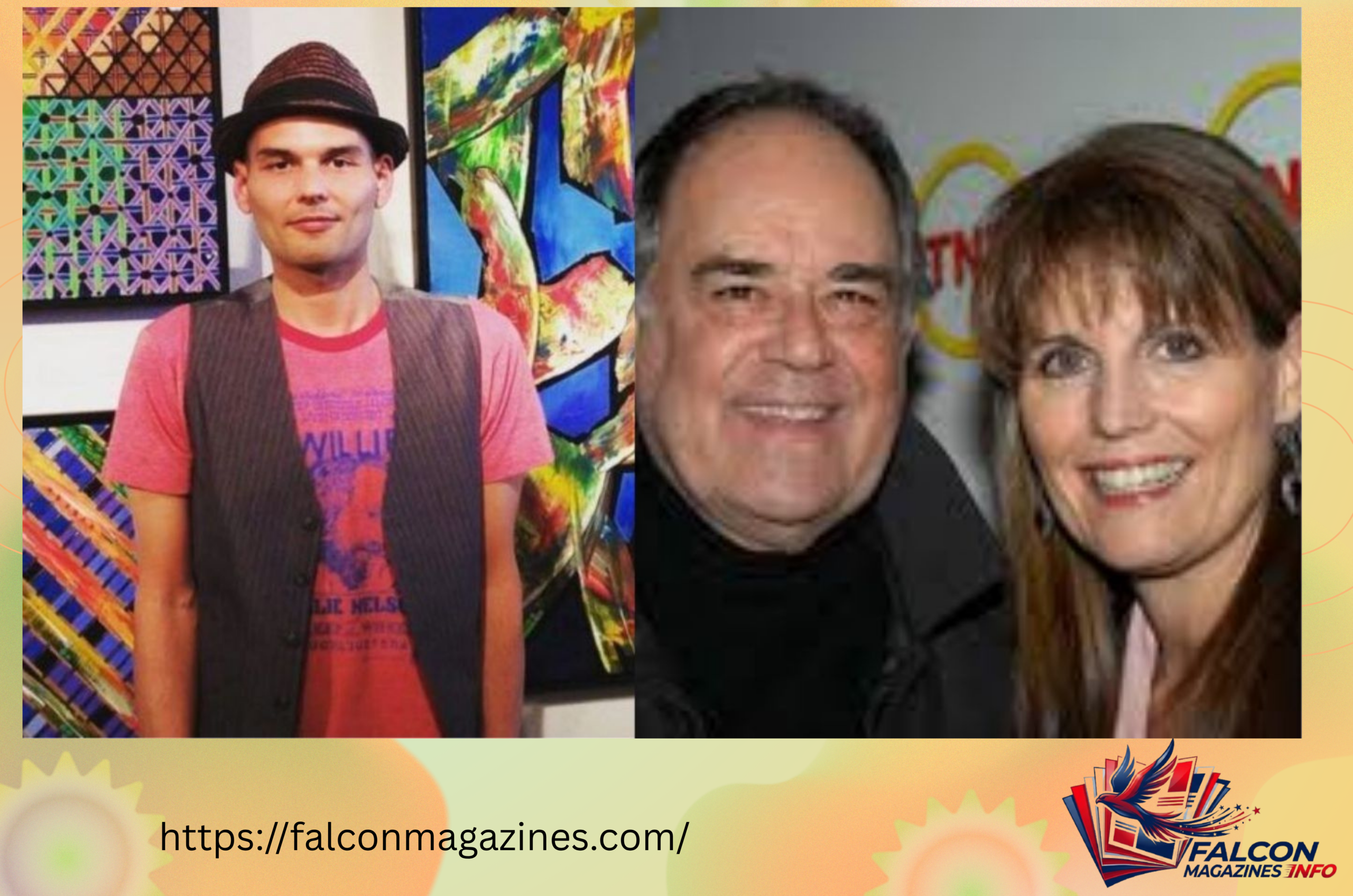
In the landscape of American pop culture, certain family lineages carry a nearly mythic status. The names Lucille Ball and Desi Arnaz are permanently etched into the golden foundation of television history, having revolutionized the entertainment industry through I Love Lucy and their pioneering production studio, Desilu. For the descendants of such towering icons, the public expectation to enter the entertainment industry can be immense. Yet, true legacy is not always about replication; often, it is about transformation. Simon Luckinbill stands as a compelling example of an individual who inherited an extraordinary creative inheritance but chose to channel it into an entirely different medium.
As the oldest son of celebrated actress Lucie Arnaz and acclaimed actor-playwright Laurence Luckinbill, Simon grew up surrounded by the intense energy of scripts, stage rehearsals, and national media attention. However, rather than stepping in front of the camera lenses or onto the theatrical stage, he turned his focus toward the quiet, introspective world of the fine arts. Operating as a highly respected contemporary painter and visual artist, Simon Luckinbill has spent decades establishing his own name. By prioritizing artistic honesty and privacy over superficial tabloid fame, he offers an inspiring case study in personal autonomy and creative independence.
Quick Biography: Key Details
| Feature | Details |
| Full Name | Simon Thomas Luckinbill |
| Date of Birth | December 10, 1980 |
| Nationality | American |
| Parents | Lucie Arnaz & Laurence Luckinbill |
| Grandparents | Lucille Ball & Desi Arnaz |
| Primary Profession | Fine Artist, Painter, Visual Arts Creator |
| Core Mediums | Acrylics on Canvas, Oil, Multi-Layered Mixed Media |
| Estimated Net Worth | $1 Million – $3 Million |
| Current Philosophy | Private Citizenship, Philanthropic Art Initiatives |
The Golden Age Background: Growing Up in a Creative Dynasty
To understand the deliberate choices made by Simon Luckinbill, one must look at the unique environment that shaped his early life. Born in December 1980, Simon was introduced to a family infrastructure that functioned as an epicenter of American performing arts. His parents, Lucie Arnaz and Laurence Luckinbill, were both highly active across Broadway, television, and film, ensuring that his childhood was rich with creative discussions, musical rehearsals, and artistic exploration.
However, despite the immense public fame tied to his grandparents, Lucille Ball and Desi Arnaz, Simon’s domestic upbringing was kept remarkably structured, humble, and grounded. His parents made a conscious, strategic decision not to push their children into the relentless spotlight of child acting. Instead, they protected their home life as a private sanctuary where education, personal integrity, and independent thinking were highly valued. This supportive environment allowed Simon to witness the incredible work ethic required to sustain a creative career, while giving him the freedom to discover his own expressive outlets away from the performance stage.
The Architecture of His Childhood Environment
- A Sanctuary of Discipline: Simon observed firsthand that true artistic success is built on relentless rehearsal and dedication, rather than just seeking public attention.
- Protection from Tabloid Culture: His parents fiercely guarded their children’s private lives, allowing them to grow up with a healthy sense of self-worth outside of Hollywood’s commercial demands.
- Encouraging Natural Talents: From an early age, drawing and painting became natural outlets for Simon to process his emotions and interpret his surroundings, laying the foundation for his future career in fine arts.
The Creative Transition: Choosing the Canvas Over the Camera
As he grew older, the choice to pursue fine arts instead of a traditional Hollywood career became a definitive turning point for Simon Luckinbill. While performance arts rely on direct, immediate public reinforcement—such as audience applause, television ratings, and box-office metrics—the world of painting offers an entirely different, internal reward system.
Luckinbill leaned deeply into mastering visual forms, dedicating himself to exploring color theory, spatial balance, and symbolic composition. Working primarily with heavy acrylics and oils on canvas, he developed a highly distinct, sophisticated signature style. His transition from an amateur painter to a professional fine artist was defined by a quiet determination to let his work speak entirely for itself, without relying on his famous family name to open doors in competitive gallery circles.
The Evolution of His Fine Art Style
- Multi-Layered Textures: Art curators and critics have noted that Luckinbill’s paintings are incredibly multi-layered, requiring viewers to look closely to uncover the shifting shapes beneath the surface.
- Sophisticated Symbolism: Rather than painting simple, literal representations, his work blends abstract forms with deep personal symbolism and complex color interactions.
- The Shift in Perspectives: A defining trait of his canvas work is its interactive nature; a second look at a single piece frequently reveals a completely different visual narrative.
Abstract Expressionism and the Rejection of Trends
In an era where the contemporary art world is frequently driven by rapid internet trends, viral shock value, and commercial reproduction, Simon Luckinbill has remained fiercely dedicated to the core principles of abstract expressionism. His creative philosophy centers on absolute honesty—the belief that a painting should be a genuine, unforced reflection of the artist’s inner truth rather than a calculated product designed for corporate office lobbies.
By choosing to show his work primarily in select, independent gallery spaces and private collections across the United States, Luckinbill has successfully protected his art from commercial over-saturation. This deliberate scarcity has earned him deep respect among serious art collectors and community curators, who view his paintings as authentic expressions of a dedicated modern master.
The Blueprint of Privacy: Navigating the Digital Age on Independent Terms
Following his foundational transitions into abstract art, Simon Luckinbill faced the modern challenge of managing an ancestral name in a highly hyper-connected digital landscape. In a media ecosystem where descendants of Hollywood icons frequently leverage their family history for viral social media followings, reality television contracts, or lifestyle branding, Luckinbill chose to execute an absolute boundary of privacy.
[Hollywood Lineage Exposure] ➔ [Deliberate Choice for the Canvas] ➔ [Absolute Digital Discretion]
By completely separating his personal identity from the mainstream entertainment press, he ensured that his artistic portfolio would be judged entirely on its structural merits. He does not maintain highly publicized, verified social media accounts designed to harvest superficial internet metrics. Instead, his digital footprint is entirely controlled, treating his visual artwork as a private, elevated conversation between the creator and the collector rather than public property for algorithmic consumption.
The Mechanics of Creative Autonomy
The framework Luckinbill established for his professional life allows him to maintain absolute creative freedom.
- The Insulated Studio: By operating his primary studio environments outside the chaotic epicenter of Los Angeles media circles, he protects his painting process from commercial pressure.
- Selective Gallery Curation: Rather than focusing on high-volume commercial production, he aligns with independent curators who value abstract expressionism over mass-market reproduction.
- Generational Decoupling: His choice to sign his work simply as an independent artist, rather than a Hollywood descendant, allows his pieces to sit in private collections entirely on their own aesthetic value.
The Synergy of Family Support and Philanthropy
While Simon Luckinbill maintains a deeply private personal life, his connection to his family remains an enduring pillar of his journey. His mother, Lucie Arnaz, and father, Laurence Luckinbill, have frequently expressed immense pride in their son’s artistic dedication, celebrating his ability to honor the family’s deep creative instincts while establishing a completely distinct professional kingdom.
In addition to his private gallery work, Luckinbill channels his creative efforts into community arts philanthropy. Believing that visual expression can serve as a powerful tool for personal healing and mental clarity, he quietly supports grassroots art programs and independent studio foundations. This phase of his biography highlights his true character; rather than using his family’s cultural capital for personal enrichment, he uses his artistic talents to pave a smoother path for emerging creators who lack access to institutional resources.
Key Strategic Asset Pillars
- Independent Equity Value: Luckinbill’s personal net worth, estimated between $1 Million and $3 Million, is built upon a foundation of private art acquisitions, exclusive gallery placements, and independent financial management.
- Structural Brand Integrity: By maintaining absolute digital discretion, he prevents the commercialization of his name, preserving the rare, premium value of his original canvases.
- A Shared Creative Philosophy: Operating alongside a family of writers, directors, and stage performers, he embodies the true evolution of a creative dynasty—proving that legacy is sustained through authentic, independent execution.
A Multi-Tiered Summary of Public and Private Transitions
To visually synthesize how Simon Luckinbill successfully transformed his Hollywood inheritance into a multi-decade legacy of fine art and private citizenship, the following matrix breaks down his core operational eras:
| Era Summary | Primary Functional Focus | Structural Core Values | Definitive Cultural Impact |
| 1980s – 1990s | Dynastic Upbringing & Grounding | Prioritizing academic growth, personal discipline, and family privacy. | Protected from early child-actor commercialization by structured, protective parenting. |
| 2000s – Mid-2010s | Transition to Abstract Expressionism | Mastering multi-layered textures, oil, and acrylic canvas composition. | Established a distinctive, highly respected signature style in independent gallery networks. |
| Late 2010s – 2026 | Enterprise Privacy & Arts Advocacy | Preserving digital boundaries while supporting grassroots community arts. | Recognized across the fine art community as an authentic force of creative sovereignty and integrity. |
The Triumph of Personal Expression
Ultimately, the journey of Simon Luckinbill offers an invaluable lesson in the power of personal autonomy. In a cultural climate that constantly encourages individuals to trade their privacy and family history for temporary internet fame, Luckinbill has spent decades proving that true creative fulfillment is achieved by honoring your own boundaries.
By remaining fiercely true to his canvas and fiercely protective of his private sanctuary, he has successfully written his own dignified narrative. Today, he stands not as a footnote in a television dynasty’s history, but as an independent force of visual clarity, a respected abstract expressionist, and a beautiful reminder that the most powerful legacies are the ones we build with our own hands.
For more exclusive, deep-dive profiles highlighting the independent strategies, personal resilience, and cultural impact of the contemporary creative minds shaping our modern history, stay connected with us at https://falconmagazines.com/.
