


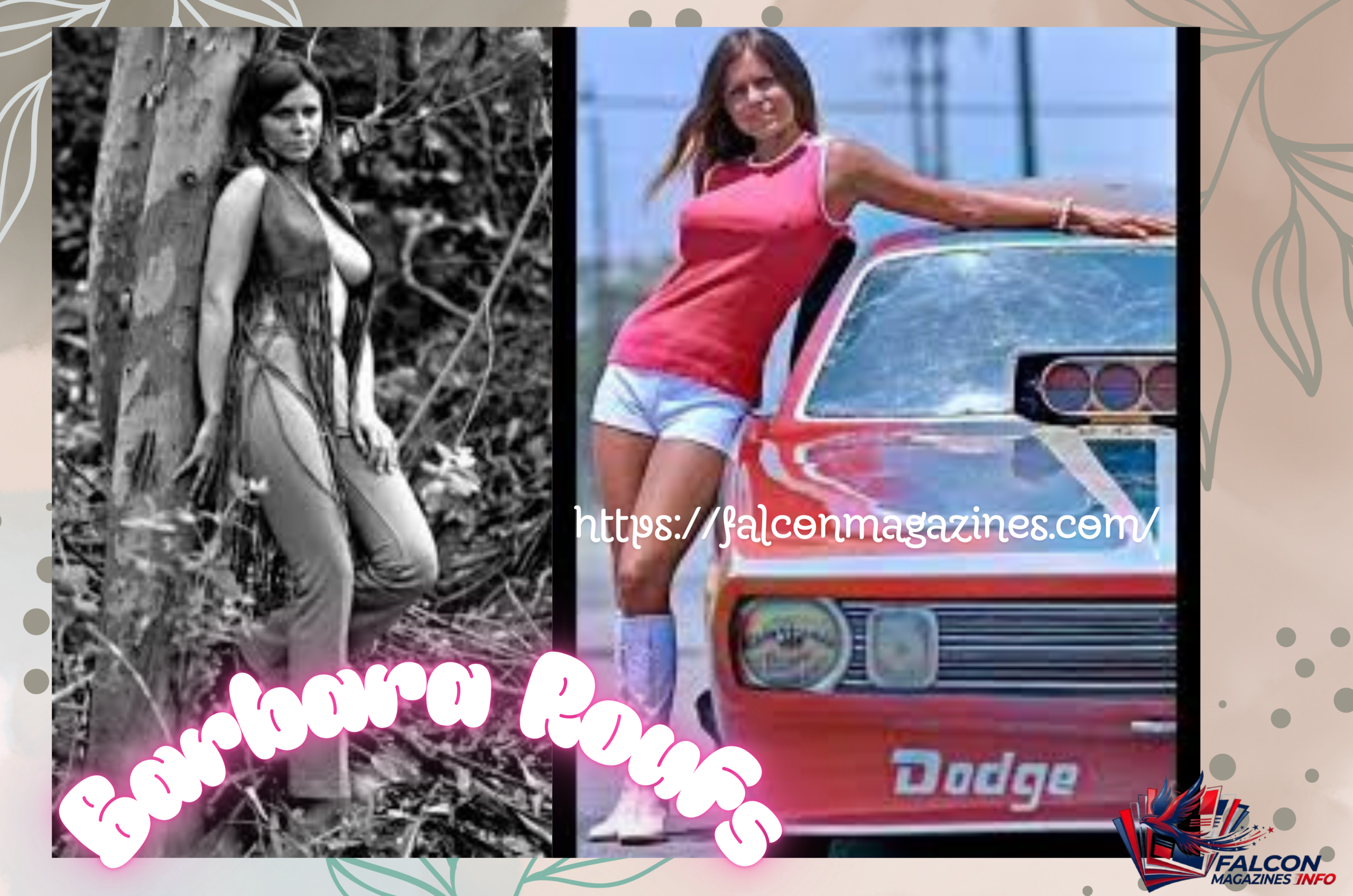
The golden era of American motorsports during the 1960s and 1970s was defined by roaring V8 engines, tire smoke, and larger-than-life personalities who electrified the asphalt. While legendary drivers commanded the headlines, a select group of captivating women transformed the starting lines into cultural stages. Barbara Roufs stands out as one of the most memorable and enduring icons of Southern California’s drag racing subculture.
As a prominent trophy girl and promotional model during the absolute peak of the funny car and top fuel dragster boom, Roufs brought a unique blend of vibrant energy, classic 1970s style, and effortless confidence to iconic tracks like the Orange County International Raceway (OCIR).
Decades after her time under the track lights, vintage photographs of her have gone viral across the internet, introducing her striking presence to entirely new generations of automotive enthusiasts.
In this comprehensive biographical feature presented by falconmagazines.com, we look into the life, career, personal background, and historical legacy of Barbara Roufs.
Quick Biography
| Key Detail | Information |
| Full Name | Barbara Roufs |
| Date of Birth | 1944 |
| Place of Birth | Southern California, United States |
| Nationality | American |
| Profession | Professional Trophy Girl, Promotional Model |
| Active Years | Early 1970s |
| Famous For | Iconic starting-line presence in Southern California drag racing |
| Children | 2 |
| Legacy Status | Deceased (1991) |
Early Life and the Southern California Car Culture
To understand how Barbara Roufs became the face of an era, one must look at the specific geographical and cultural environment that shaped her youth. Born in 1944, Roufs grew up in Southern California during a time when the region was rapidly evolving into the epicenter of global car culture.
The post-World War II economic boom had catalyzed a massive interest in hot rods, custom paint jobs, and competitive speed. By the time Roufs reached adulthood in the 1960s, drag racing had officially transitioned from illegal street duels into a highly organized, professional sport backed by national corporate sponsors.
While details regarding her early schooling remain private, those who knew her noted that her vibrant, outgoing personality was a perfect fit for the sunny, high-energy California lifestyle. Unlike many younger models who entered the industry fresh out of high school, Roufs brought a mature, grounded confidence to her early assignments—a quality that quickly caught the attention of prominent motorsport promoters and track photographers.
The Breakthrough: Golden Era of Drag Racing
In the early 1970s, Barbara Roufs officially stepped into the fast-paced world of professional drag racing promotion. Her breakthrough coincided with a structural shift in how motorsports were marketed to the public. Promoters realized that combining high-horsepower machinery with charismatic, fashionable women was a goldmine for fan engagement.
Standing Out at Orange County International Raceway (OCIR)
Roufs became an absolute favorite at the legendary Orange County International Raceway and various tracks across the bustling Southern California circuit. What made her career so unique was her demographic standing among her peers.
In 1971, Roufs was a 29-year-old mother of two, making her slightly older than the typical teenage promotional models of the era. However, this exact factor worked entirely to her advantage. She possessed a stunning figure, a playful, fearless personality, and a natural, maternal confidence that completely disarmed nervous drivers and commanded the respect of rowdy grandstands.
The "Trophy Girl" Function in the 1970s:
1. Starting Line Presence: Guiding vehicles into the staging lanes and building fan anticipation.
2. Winner's Circle: Presenting corporate trophies, posing for media syndication, and congratulating victorious drivers.
3. Brand Ambassadorship: Representing local automotive businesses, performance parts manufacturers, and drag strip venues.
The Power of 1970s Fashion and Style
Roufs was a master of the distinct fashion trends that defined the early 1970s. She routinely appeared on the hot California asphalt sporting:
- Voluminous Barrel Curl Updos: A classic, high-glamour hairstyle that withstood the intense winds generated by passing nitro-burning funny cars.
- Bold, Custom Apparels: From vibrant go-go boots and short shorts to customized corporate sponsor t-shirts that perfectly highlighted her athletic frame.
- Effortless Charisma: While track temperatures frequently soared past 100 degrees Fahrenheit, Roufs consistently maintained an immaculate, smiling composure for the cameras.
Memorable Track Collaborations and High-Profile Poses
Throughout her active years, Roufs was photographed alongside some of the most prominent names and iconic machinery in drag racing history. Her presence in the staging lanes served as a visual stamp of prestige for any racing team.
Posing with Larry Bowers
One of her most famous and enduring historical photographs features her standing alongside legendary top fuel drag racer Larry Bowers in 1971. Bowers, a highly respected driver known for running competitive, independent operations, utilized Roufs’ immense popularity to boost team visibility. The images captured by track side journalists perfectly framed the classic dualism of 1971 motorsports: a raw, dangerous, high-tech dragster paired with the definitive, smiling beauty of California car culture.
The Contrast with “Jungle Pam” Hardy
When historians analyze the most influential women of 1970s drag racing, Roufs is frequently discussed alongside “Jungle Pam” Hardy, the iconic partner of funny car showman “Jungle Jim” Liberman.
While Jungle Pam was famous for her deep, direct involvement with a single touring race team—frequently backing up Liberman’s car after high-speed burnouts—Barbara Roufs operated as a versatile, track-wide ambassador. Roufs represented the venue itself, welcoming all victorious drivers into the winner’s circle and distributing trophies across multiple competitive classes, from stock eliminators to top fuel giants.
The Visual Revival: Becoming a Digital-Era Viral Sensation
The true magnitude of Barbara Roufs’ impact on the automotive world did not diminish when she stepped away from the track lanes. Instead, it underwent an extraordinary evolution decades later, driven by the rise of the digital archiving movement and social media platforms.
The Power of Vintage Archiving
In the late 2000s and early 2010s, automotive historians, veteran track photographers, and dedicated drag racing fans began meticulously scanning old film negatives, magazine pages, and track programs from the 1970s. The goal was to preserve the visual history of legendary Southern California venues that had long since been demolished.
When pristine, high-resolution color photographs of Barbara Roufs were uploaded to online databases, automotive blogs, and Pinterest boards, the reaction from the global car community was immediate. The images spread rapidly across Facebook groups, Instagram feeds, and specialized hot rod forums.
The Anatomy of a Viral Image:
- Subject: Barbara Roufs standing confidently on the asphalt of OCIR in 1971.
- Visual Contrast: The vibrant, sun-drenched colors of 1970s film paired with raw mechanical power.
- Cultural Resonance: A pure, unfiltered look at a distinct American subculture that cannot be replicated.
Capturing a Transformed Audience
What made her digital revival so fascinating was who was sharing the images. It wasn’t just veteran drag racing fans who remembered the 1971 season; it was an entirely new generation of young mechanics, fashion designers, and vintage enthusiasts.
To modern audiences saturated with heavily filtered, hyper-produced digital content, Roufs represented a raw, authentic form of classic American glamour. Her natural athletic frame, unedited smile, and bold fashion choices struck a chord with contemporary style influencers, transforming her into a retro muse for modern streetwear and automotive-apparel design.
Private Life, Family Dynamics, and Sudden Loss
While her public persona was defined by the high-octane energy of the starting line, Barbara Roufs prioritised maintaining a grounded, deeply loving private life for her family away from the cameras.
A Dedicated Mother Behind the Scenes
As noted by her daughter, Jet Dougherty, Roufs’ time as a prominent trophy girl was merely a brief, exciting chapter in a life that was ultimately anchored in family devotion. Balancing the demands of a high-profile promotional career with the daily responsibilities of raising two children during the turbulent cultural landscape of the early 1970s required an exceptional amount of stamina and organization.
Roufs managed this balance by keeping her track life and home life distinctly separated. To her children, she wasn’t a viral drag racing icon; she was a supportive, highly energetic mother who instilled in them a deep sense of personal independence and a love for the California landscape.
The Tragedy of 1991
The story of Barbara Roufs is also marked by profound tragedy. In 1991, at the age of 47, Roufs passed away unexpectedly. Her sudden death brought a premature end to the life of a woman who had brought so much joy, light, and vibrant energy to everyone around her.
The loss was devastating to her immediate family, close friends, and the tight-knit community of veteran Southern California drag racers who had regarded her as a sister and a guiding light during the sport’s most adventurous decade. Her family chose to handle their grief with absolute privacy, ensuring that her memory was preserved with dignity, love, and respect.
Historical Context: The Demise of the Classic Drag Strip
To fully appreciate the nostalgic value placed on vintage photographs of Barbara Roufs, one must understand what happened to the physical spaces she occupied. The venues that birthed her career have achieved a near-mythical status because they no longer exist.
The Fate of Orange County International Raceway (OCIR)
Opened in 1967, OCIR was widely regarded as the most advanced, hyper-modern drag racing facility in the world. It featured a tower with a restaurant, sophisticated electronic timing systems, and a massive seating capacity. It was the exact stage where Roufs achieved her greatest promotional triumphs.
However, as the real estate market in Southern California exploded throughout the late 1970s and 1980s, the land beneath these legendary tracks became incredibly valuable to commercial developers.
- 1983 Closure: Under intense economic pressure, OCIR officially closed its gates for the final time.
- Commercial Transformation: The ground where Roufs once guided nitro-fueled funny cars into the staging lanes was completely paved over to make way for the sprawling industrial parks and corporate offices of the modern Irvine Spectrum area.
Because these historic tracks vanished, the photographs of Barbara Roufs took on an added layer of historical importance. She didn’t just represent a person; she became a visual guardian of a lost world—a symbol of a distinct golden era in California history before urban sprawl permanently altered the landscape.
Analyzing the Economic Legacy of 1970s Modeling
In the modern era of sports marketing, top-tier promotional models and corporate brand ambassadors secure highly structured, multi-million dollar contracts, complete with digital syndication rights and global television revenue. During the early 1970s, the economic framework for trophy girls was vastly different.
| Era Feature | 1970s Model Reality (Barbara Roufs Era) | Modern Brand Ambassador |
| Compensation | Modest daily track rates, local corporate trade-offs, and free event access. | High-end salaries, corporate equity, and structured social media bonuses. |
| Image Rights | Track photographers retained full ownership of film negatives; models rarely received long-term royalties. | Complex digital copyright protections and multi-platform licensing fees. |
| Career Longevity | Often viewed as a brief, transitional hobby or localized promotional gig. | Built into highly sustainable, multi-decade corporate enterprise careers. |
Despite operating within this modest economic framework, Roufs approached her work with the absolute professionalism of a modern executive. Her dedication ensured that the brands she represented—from local speed shops to national performance parts manufacturers—received maximum consumer exposure, paving the way for the sophisticated corporate marketing structures that define professional motorsports today.
Conclusion: The Timeless Spark of a Motorsports Pioneer
Barbara Roufs’ journey from the sunny neighborhoods of Southern California to the absolute pinnacle of 1970s drag racing culture is a testament to the power of authentic charisma. She didn’t merely stand next to fast cars; she injected a sense of joy, style, and humanity into a sport that was defined by raw iron and dangerous speeds.
While her time on this earth was cut tragically short, the digital era has rightfully restored her name to its proper place in automotive history. For the millions of hot rod enthusiasts, vintage collectors, and drag racing historians who continue to study the golden era of American speed, Barbara Roufs will forever be celebrated as the definitive queen of the starting line—an eternal symbol of a time when the engines were loud, the style was bold, and the California sun shone brightly on the open asphalt.
